
Dawn Chorus
The sun hasn't yet cleared the headland at Mill Creek, but thirty voices are already warming up on the shingle beach. Steam rises from the group as they run through scales in the crisp morning air, their breath visible in white puffs that dissipate over the Dart estuary. At precisely 7am, they launch into a haunting arrangement of 'She Moved Through the Fair' – and then, without missing a note, they walk backwards into the river.
 Photo: Mill Creek, via image-cdn.carrot.com
What follows defies logic and possibly sanity. As the water reaches their waists, then chests, the singers maintain their harmony even as their voices climb higher with the shock of cold water. Only when fully submerged do they finally break formation, emerging with gasps, laughter, and an expression of euphoria that's become familiar to anyone who's witnessed the Southwest's swimming choir phenomenon.
"It's absolutely barking mad," admits Sarah Henley, conductor of the Dart Estuary Singers, as she towels off after the morning's session. "But it's also the most alive I've ever felt. There's something about combining music with cold water that creates a high you can't get anywhere else."
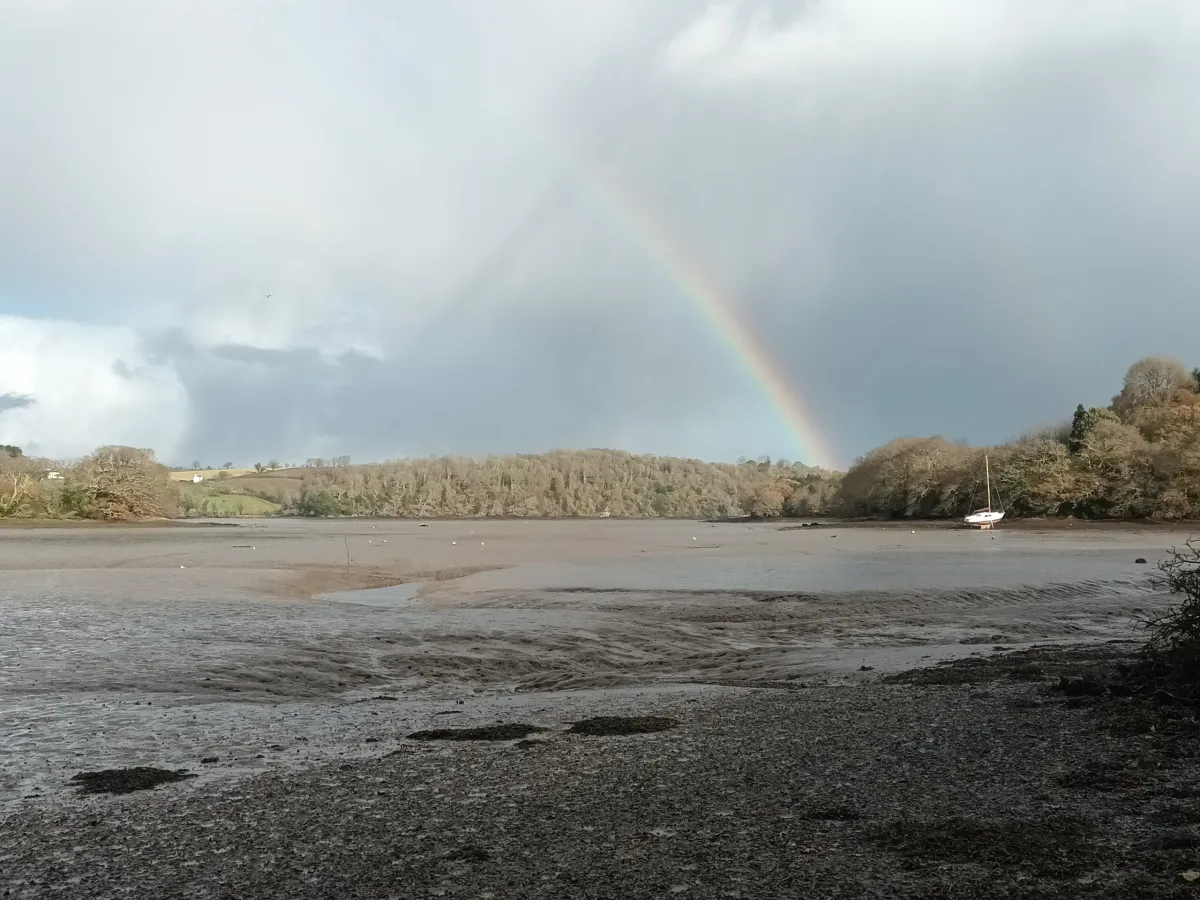 Photo: Dart Estuary Singers, via www.dartharbour.org
The Science of Shivers
What these aquatic choristers have discovered intuitively, researchers are now documenting scientifically. Cold water immersion triggers a cascade of physiological responses – increased heart rate, heightened alertness, release of endorphins and adrenaline. When combined with the deep breathing required for singing, the effects appear to be amplified.
Dr. James Morrison at Exeter University has been studying the swimming choir movement as part of his research into therapeutic interventions. "Both activities stimulate the vagus nerve, which regulates our parasympathetic nervous system," he explains. "Singing requires controlled breathing and vocal vibration, while cold water exposure activates stress-response mechanisms. Together, they seem to create a powerful reset for both mental and physical wellbeing."
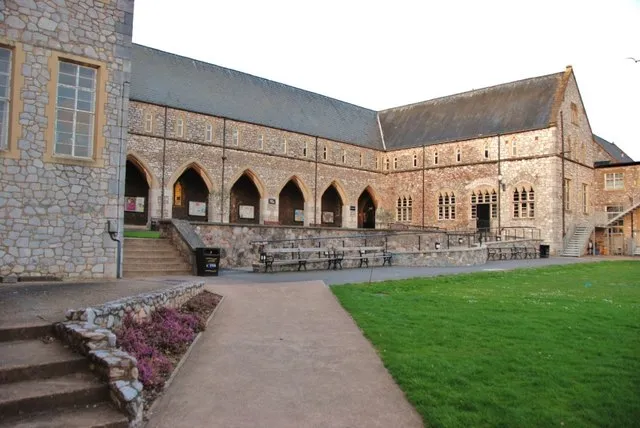 Photo: Exeter University, via s0.geograph.org.uk
The anecdotal evidence from participants supports the science. Members of Devon's swimming choirs report improved sleep, reduced anxiety, and a sense of community that extends far beyond their weekly water sessions.
Tidal Movements
The movement began almost by accident three years ago when the Totnes Community Choir decided to celebrate the summer solstice with a dawn swim after their practice. What was meant to be a one-off celebration became a weekly ritual as members discovered the unexpected benefits of combining their two passions.
"We'd been meeting in the church hall for years," recalls founding member Janet Price. "Good acoustics, but rather sterile. Taking the choir outdoors, especially into water, transformed our sound and our relationships. You can't maintain social barriers when you're standing chest-deep in the Dart at dawn."
Word spread through Devon's tight-knit musical community, and similar groups began forming across the county. The Salcombe Sea Singers meet at South Sands, their voices carrying across the estuary as they wade in among the moored yachts. In Dartmouth, the Kingswear Tide Choir gathers at Mill Creek, while the newest group, the Plymouth Sound Collective, braves the choppier waters of the Barbican.
Each group has developed its own traditions and repertoire, but all share certain characteristics: early morning meetings, careful attention to tidal conditions, and a musical selection that seems to favour folk songs and sea shanties – pieces that, as one member puts it, "feel right when you're surrounded by water."
Practical Harmonies
The logistics of outdoor water singing present unique challenges that would defeat less committed musicians. Waterproof folders protect sheet music, though most pieces are learned by heart. Conductors use exaggerated gestures visible through spray and mist. Warm-up exercises take on new importance when hypothermia is a genuine risk.
"You learn to read the conditions like a sailor," explains Tom Bradshaw, who leads the Plymouth group. "Wind direction affects acoustics, tide times determine our schedule, and water temperature influences how long we can stay in. It's made us much more aware of our environment."
Safety protocols have evolved through experience. All groups require basic swimming competency and maintain strict buddy systems. First aid training is common, and several members hold beach lifeguard qualifications. The groups also work closely with local coastguards, who've become accustomed to early morning reports of "unusual activity" that turn out to be singing swimmers.
Beyond the Bubble
What began as a peculiarly Southwest phenomenon is starting to attract national attention. The BBC featured the Dart Estuary Singers on Radio 4's 'Open Country', while social media posts of singing swimmers regularly go viral. Enquiries arrive from across Britain asking for advice on starting similar groups.
"We get emails from Scotland, Wales, even London asking how to begin," says Henley. "But it's not something you can just replicate anywhere. You need the right combination of water access, community spirit, and perhaps a touch of Devon madness."
The movement has also caught the attention of music therapists and mental health professionals. Several NHS trusts are exploring whether swimming choirs could be prescribed as interventions for depression and anxiety. Early pilot programmes suggest promising results, though researchers caution that more formal studies are needed.
Cultural Currents
The swimming choir movement reflects broader trends in both music-making and outdoor wellness. Community choirs have exploded in popularity across Britain, while wild swimming has moved from fringe activity to mainstream pursuit. The combination seems to capture something distinctly contemporary – a desire for authentic experience in an increasingly digital world.
"People are hungry for real connection," observes Dr. Morrison. "Both with each other and with the natural world. Swimming choirs provide both simultaneously. You can't fake presence when you're singing in cold water at dawn."
The groups also embody a particularly Southwest approach to life – a willingness to embrace the elements, to find joy in challenging conditions, and to create community around shared adventure. It's an attitude that's helped the region weather economic storms and maintain its distinct cultural identity.
Future Tides
As the movement grows, questions arise about sustainability and development. Some members worry about commercialisation – the inevitable arrival of paid instructors, branded equipment, and corporate wellness retreats that might sanitise the experience.
"The magic is in the simplicity," reflects Price. "It's just people, water, and music. The moment someone tries to package that into a product, something essential gets lost."
For now, the swimming choirs remain resolutely amateur and local, their membership bound by shared enthusiasm rather than commercial interest. Whether this can continue as the movement expands remains to be seen.
As I watch the Dart Estuary Singers pack up their towels and waterproof bags, their faces still glowing from their morning immersion, the appeal becomes clear. In a world of virtual connections and artificial experiences, they've found something irreducibly real. The combination of music, cold water, and community creates a ritual that's both ancient and utterly contemporary – a way of being fully present in the moment while connected to something larger than themselves.
"Will we still be doing this when we're 80?" muses one member as she cycles away from the creek. "Absolutely. Assuming we can still get in and out of the water. Though by then, someone might have to push us in."