The Invisible Army
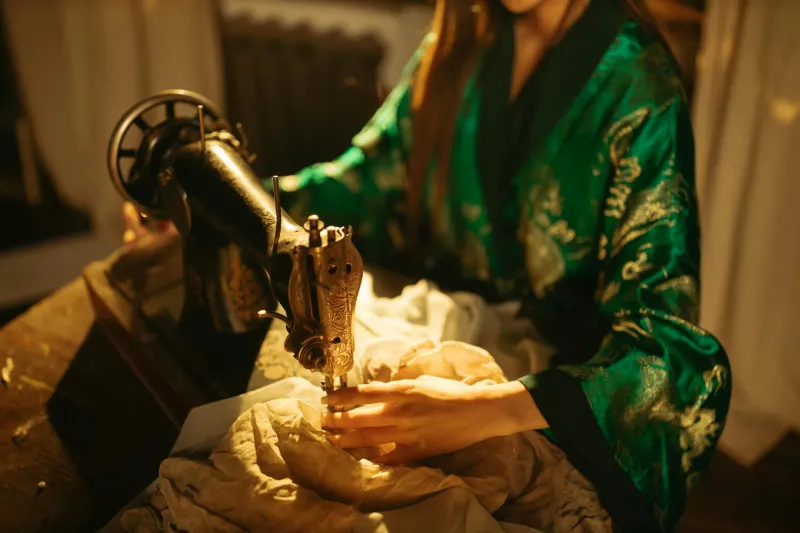
In a converted garage behind a terraced house in Totnes, Linda Ashworth is performing miracles with a sewing machine older than most of her grandchildren. Spread across every available surface are the makings of what will become the wardrobe for the local dramatic society's production of 'Pride and Prejudice': charity shop ballgowns awaiting transformation, curtain fabric destined to become Regency waistcoats, and a mountain of buttons sorted by size and era.
"People think amateur dramatics is amateur," Ashworth chuckles, holding up a intricately beaded bodice that would cost hundreds in a West End costume house. "But when you're dressing fifteen actors on a budget of fifty pounds, you learn to work proper magic."
Ashworth is part of Devon's invisible army of costume creators, the women and men whose ingenuity and skill ensure that every village hall Hamlet looks the part, every church hall Christmas pantomime sparkles with authenticity. What few outside the amateur dramatics world realise is that these unsung heroes have developed techniques and aesthetic sensibilities that are now attracting attention far beyond the footlights.
The Art of Creative Constraint
Constraint, it turns out, is creativity's greatest teacher. When the Kingsbridge Players needed period-accurate medieval costumes for their summer production of 'Murder in the Cathedral', wardrobe mistress Jean Willoughby had exactly £73 to dress a cast of twenty-two. Six months later, their production photographs were being shared by historical costume enthusiasts across social media, praising the authenticity and attention to detail.
"I spent three weeks in every charity shop from Dartmouth to Plymouth," Willoughby recalls. "Old curtains became monks' habits, a discarded bridesmaid's dress transformed into a nobleman's tunic. You learn to see potential where others see jumble."
This ability to reimagine and repurpose has caught the attention of sustainable fashion advocates. Emma Richardson, founder of the eco-fashion collective 'Mended', recently spent a week shadowing costume departments across South Devon. "These women have mastered techniques that fashion schools are only just beginning to teach," she observes. "They're pattern-drafting, fabric-dyeing, and creating complex garments from scratch – often with better results than commercial alternatives."
Masters of Disguise
The scope of amateur dramatics costume-making is staggering. In a single season, the Dartmouth Amateur Operatic Society might stage everything from Gilbert and Sullivan to modern musicals, requiring wardrobes that span centuries and styles. Costume supervisor Patricia Henley has been creating these theatrical transformations for over three decades.
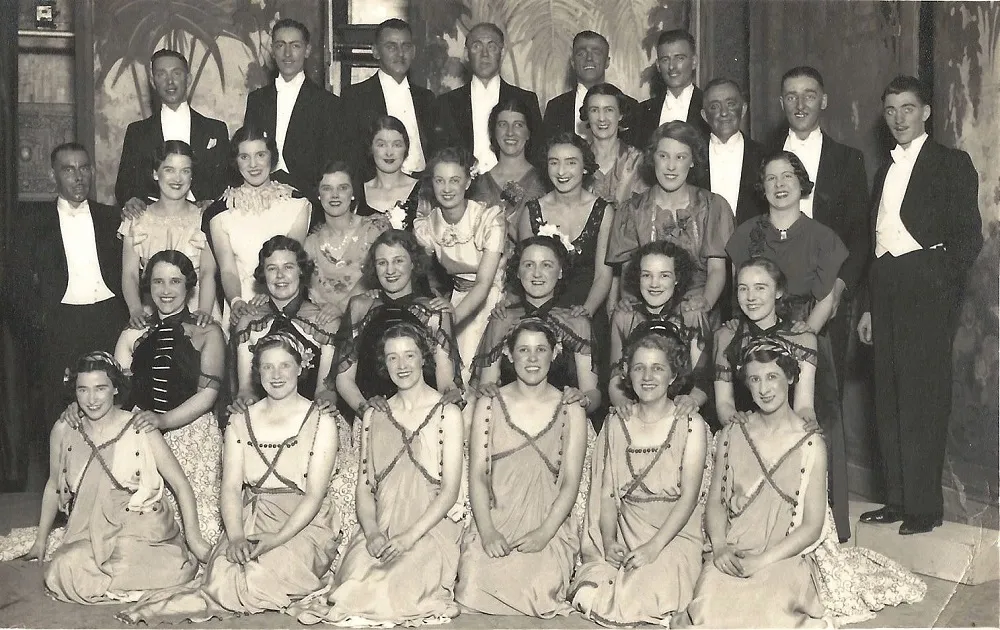 Photo: Dartmouth Amateur Operatic Society, via aireboroughhistoricalsociety.org.uk
"Last year we did 'Sweeney Todd' in the spring and 'The Mikado' in autumn," she explains, surrounded by rails of meticulously organised costumes in her converted barn workshop. "That's Victorian London poverty to Japanese imperial court in six months. You can't just pop down to Marks & Spencer for that."
Henley's techniques have evolved into a sophisticated system of modular construction, where base garments can be transformed with strategic additions and alterations. A simple black dress might serve as a Victorian mourning gown, a 1920s flapper outfit, or a contemporary cocktail dress depending on accessories and styling. "It's like having a theatrical LEGO set," she grins.
The Charity Shop Alchemists
Devon's costume makers have elevated charity shop sourcing to an art form. They know which shops receive donations from which areas, when new stock typically arrives, and how to spot quality pieces buried among the dross. More importantly, they've developed relationships with shop volunteers who set aside potentially useful items.
"Mary at the British Heart Foundation in Paignton knows I'm always looking for anything with interesting buttons or good fabric," explains costume designer Robert Fairweather, who's dressed productions across the South Hams for fifteen years. "She'll text me if something promising comes in. It's a proper network."
This network extends beyond shopping. Costume departments share resources, lending pieces between productions and maintaining informal databases of who has what. When the Brixham Theatre Company needed 1940s military uniforms, they borrowed from three different societies across Devon, creating a pooled wardrobe that would be the envy of professional theatre companies.
From Stage to Street
The influence of amateur dramatics costume-making is increasingly visible beyond the theatre world. Several Devon designers have built successful businesses applying theatrical techniques to fashion and interior design. Sarah Blackwell's 'Vintage Reinvented' workshop in Ashburton teaches theatrical costume construction methods to fashion students and hobbyists.
"Theatre costume-making is about creating character through clothing," Blackwell explains. "That's exactly what sustainable fashion should be doing – telling stories, creating meaning, making clothes that matter rather than just consuming."
The environmental credentials of amateur dramatics costume departments are impressive by default. Nothing is wasted, everything is repurposed, and garments are built to last multiple productions. In an era of fast fashion and disposable culture, these workshops represent an alternative approach that's both economically and environmentally sustainable.
The Next Generation
Younger members of amateur dramatic societies are bringing fresh perspectives to traditional techniques. University student Jake Morrison joined the Dartmouth Players during lockdown and has revolutionised their approach to historical research, using online archives and museum databases to ensure period accuracy.
"The older generation has incredible practical skills," Morrison observes. "But I can bring the research side – finding out exactly how a Tudor doublet was constructed or what fabrics were actually available in Victorian times. It's a brilliant combination."
This intergenerational collaboration is producing costumes that rival those of professional productions. The Dartmouth Players' recent production of 'The Tempest' featured Prospero's robes that incorporated hand-painted silk panels and historically accurate construction techniques, created entirely by volunteers using charity shop materials and traditional methods.
Beyond the Curtain Call
As sustainable fashion becomes increasingly important and fast fashion faces growing criticism, Devon's amateur dramatics costume makers find themselves at the forefront of a cultural shift. Their combination of creative problem-solving, environmental consciousness, and sheer ingenuity offers lessons far beyond the world of village theatre.
"We've always known that the best creativity comes from having to make do," reflects Linda Ashworth, putting the finishing touches on a Regency ballgown that cost less than a high street T-shirt to create. "Now the rest of the world is catching up."
In workshops and garages across Devon, the needle and thread revolution continues quietly, one costume at a time. These unsung heroes of amateur dramatics aren't just dressing village productions – they're demonstrating that with skill, imagination, and a good eye for a charity shop bargain, anything is possible.