Dawn Chorus and Downward Dogs
At 6:30 on a Tuesday morning, while most of Dartmouth still slumbers, the beer garden behind The Floating Bridge is alive with an entirely different kind of spirit. Twenty-three yoga mats are arranged in neat rows where picnic tables usually sit, and instructor Sarah Chen guides her early-bird students through sun salutations as the Dart estuary glimmers in the background.
 Photo: The Floating Bridge, via images.pexels.com
"I never thought I'd be teaching yoga where people drink pints," Chen admits with a laugh, adjusting her position beside a hanging basket that still holds yesterday's cigarette butts. "But there's something magical about these spaces when they're empty. They've got this openness, this sense of possibility that you don't find in purpose-built studios."
Chen's dawn sessions are just one example of how Devon's pub gardens are being quietly transformed into community hubs that serve purposes their Victorian architects never imagined. Across the county, these overlooked outdoor spaces are hosting everything from children's nature clubs to amateur astronomy societies, creating a new model for rural community engagement that's as British as warm beer and soggy chips.
The Accidental Allotments
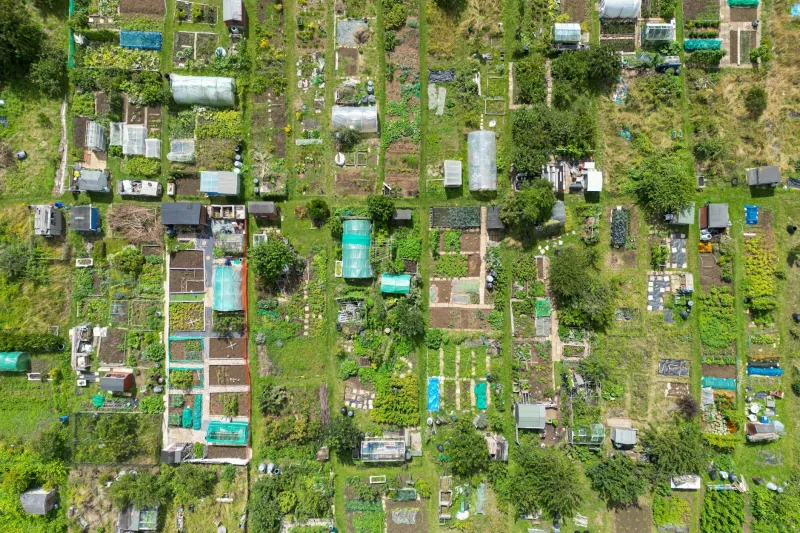
Ten miles inland, the garden of The Royal Oak in South Brent has been divided into neat vegetable plots that wouldn't look out of place on a National Trust estate. What started as landlord Mike Patterson's attempt to grow his own herbs for the kitchen has evolved into a full-blown community allotment scheme that supplies half the village with fresh produce.
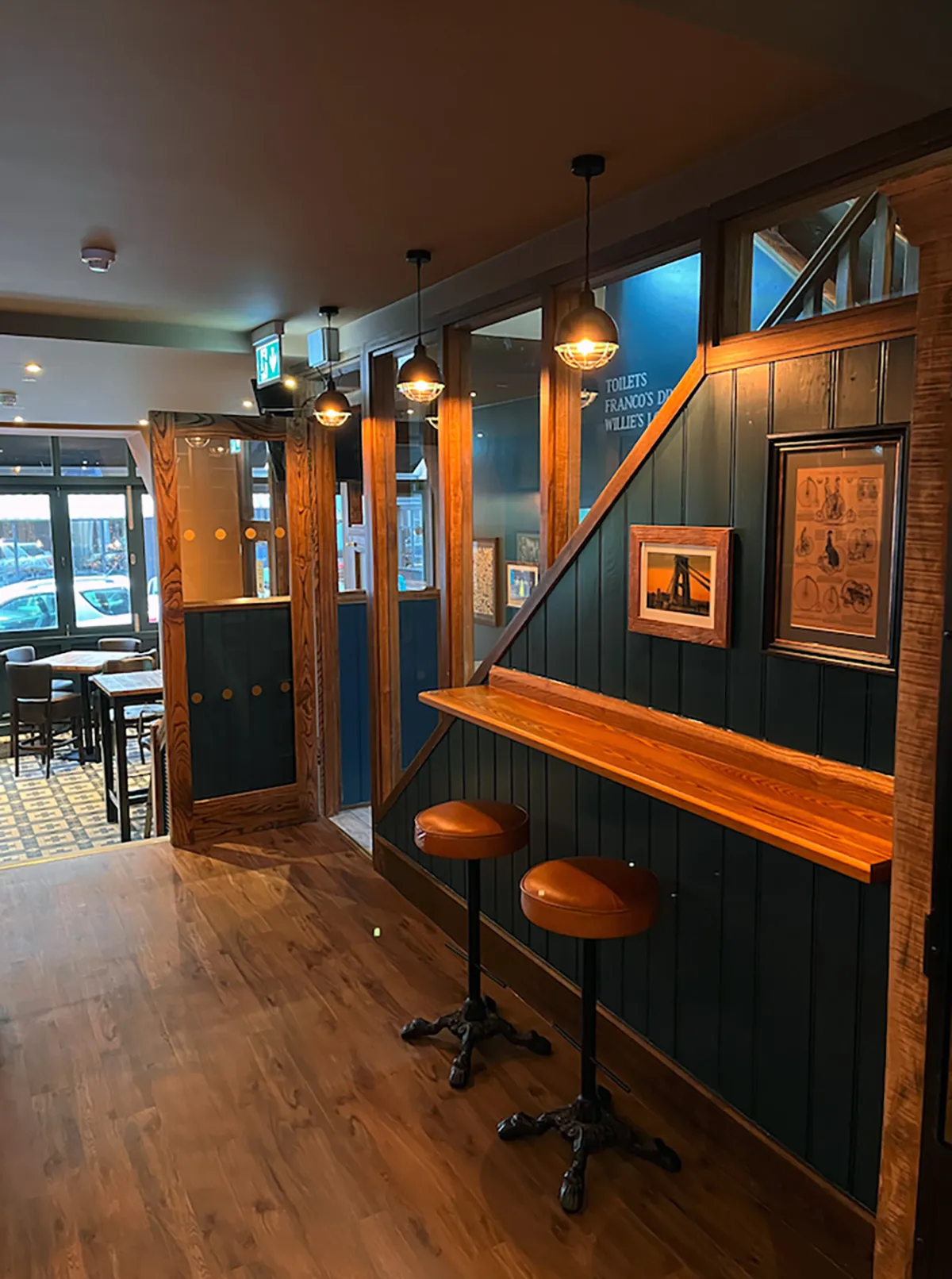 Photo: The Royal Oak, via www.inndecs.com
"We had all this space that was only being used for maybe six hours a day in summer," Patterson explains, pulling up a handful of prize-winning carrots. "Seemed daft to let it just sit there growing weeds when people were crying out for growing space."
The Royal Oak's garden now hosts twenty-three individual plots, rented by locals for £15 per year. Plot holders range from retired teachers to young families, and the scheme has generated its own micro-economy of seed-swapping, produce-sharing, and gardening wisdom. More importantly, it's created connections between villagers who might otherwise never interact.
"Mrs Henderson from the post office grows the most incredible tomatoes," says plot holder Jenny Williams, a newcomer to the village who moved from London during the pandemic. "She's teaching my kids how to identify different bird calls while they help her weed. You can't put a price on that kind of community connection."
Verses and Pints
As evening draws in across the South Hams, a different kind of cultivation is taking place. The garden of The Church House Inn in Marldon has been transformed into an outdoor amphitheatre of sorts, with hay bales arranged in a rough circle around a makeshift stage constructed from beer crates and reclaimed wood. This is the monthly meeting of the Torbay Poetry Collective, and tonight they're sharing original work inspired by the Devon landscape.
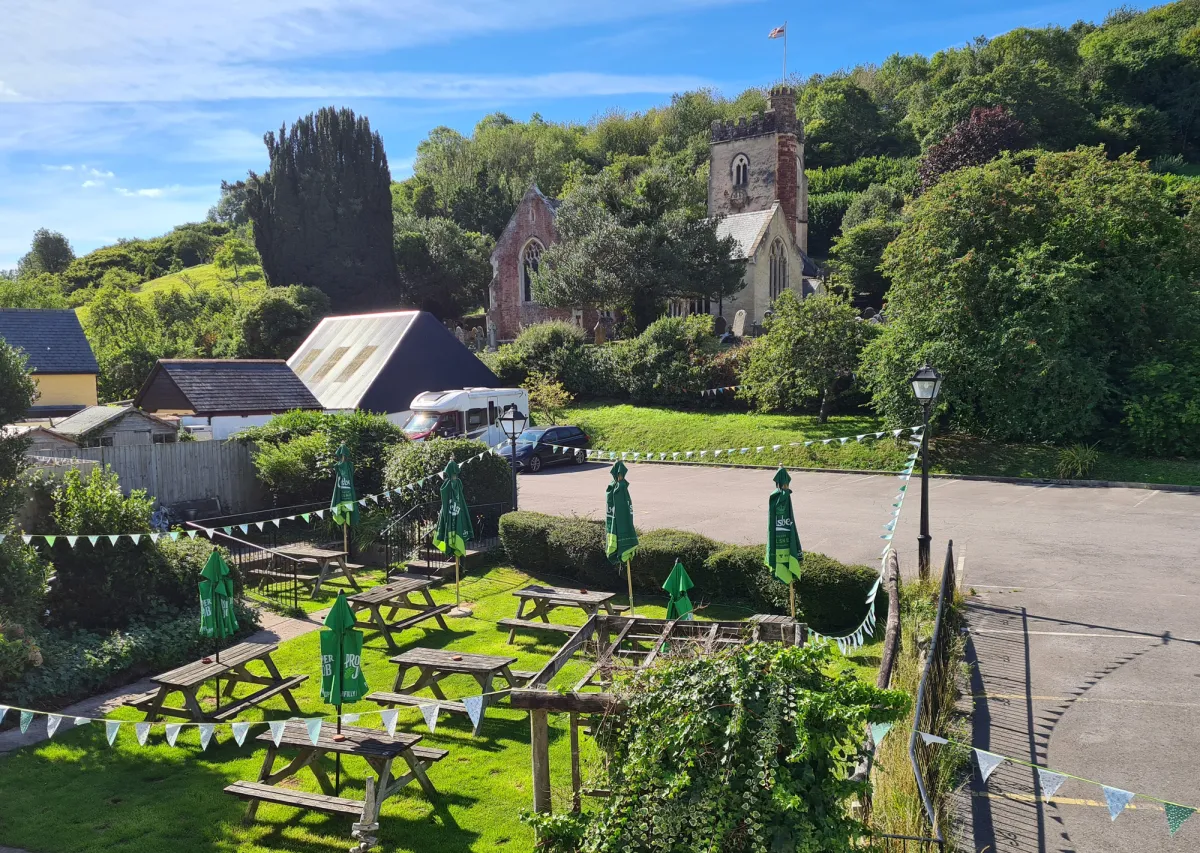 Photo: The Church House Inn, via thechurchhouseinn.pub
"There's something about being outside that changes how people engage with poetry," observes collective founder David Marsh, a former teacher who started the group after struggling to find venues that could accommodate their growing membership. "Inside a village hall, people whisper and worry about disturbing others. Out here, they project their voices, they perform rather than just recite."
The informal setting has attracted poets who might never darken the door of a traditional literary evening. Local farmer Tom Bridgeman has been attending for eight months and recently performed his first original poem, a meditation on lambing season that received a standing ovation from the assembled crowd of thirty-odd poetry lovers.
"I'd never thought of myself as the poetry type," Bridgeman admits. "But sitting in a pub garden with a pint, listening to people talk about things that matter – it doesn't feel intimidating like it might in some posh venue."
The Children's Hour
Perhaps the most transformative use of pub garden space is happening during the day, when these venues become impromptu adventure playgrounds for local children. The Tradesman's Arms in Scorriton has partnered with local primary schools to offer after-school 'forest school' sessions in their extensive garden, which backs onto ancient woodland.
"We've got space, we've got trees, we've got access to proper countryside," explains headteacher Rachel Morrison, watching a group of seven-year-olds construct elaborate dens from fallen branches. "The children learn more about nature in two hours here than they would in weeks of classroom lessons."
The sessions have proven so popular that landlord Pete Summers has invested in proper outdoor learning equipment, including fire pits for cooking and tool sets for woodland crafts. The scheme has also solved a practical problem for working parents, providing affordable childcare in a setting that feels more like adventure than supervision.
"My daughter comes home absolutely filthy and completely exhausted," says parent Katie Phillips. "She's learned to light fires, identify plants, and work as part of a team. It's everything we'd want from outdoor education, but in our local pub garden."
The Democratic Green Space
What makes pub gardens particularly valuable as community spaces is their accessibility and lack of formal structure. Unlike village halls, which require booking fees and committee approval, or church halls, which carry religious associations, pub gardens offer neutral territory that belongs to everyone and no one.
"There's no hierarchy in a pub garden," observes community development worker Lisa Thompson, who has studied the phenomenon across rural Devon. "The retired colonel and the teenage skateboarder are on equal footing. That's incredibly rare in traditional community spaces."
This democratic quality has made pub gardens natural venues for community meetings and informal civic engagement. The Elephant's Nest in Horndon recently hosted a packed public meeting about local planning applications, with residents spilling out onto the grass to debate housing developments and traffic concerns.
Weather and Wisdom
Of course, this being Devon, weather plays a starring role in the pub garden renaissance. Landlords have invested in everything from industrial-strength gazebos to fire pits and outdoor heaters, extending the usable season far beyond traditional summer months.
"We've learned that Devonians are tougher than we gave them credit for," laughs Sarah Chen, who now runs yoga classes year-round regardless of conditions. "I've had people doing warrior poses in horizontal rain. There's something about being outdoors that brings out people's resilience."
The Future of Rural Community
As traditional community institutions face pressure from funding cuts and changing social habits, pub gardens are emerging as unlikely saviours of rural social life. They offer something that purpose-built community centres often lack: character, atmosphere, and the simple pleasure of being outside.
"We're not trying to replace village halls or church centres," emphasises Mike Patterson from The Royal Oak. "But we are proving that community spaces don't have to be formal or purpose-built to be valuable. Sometimes the best things happen in the spaces between the official structures."
As the sun sets over another day of unexpected community activity in Devon's pub gardens, one thing is clear: these humble outdoor spaces are quietly rewriting the rules of rural social life, one yoga session, poetry reading, and vegetable plot at a time. In a county where community spirit has always run deep, they're proving that sometimes the most profound transformations happen not through grand gestures, but through the simple act of opening doors – and gates – to new possibilities.