The Gilded Revolution
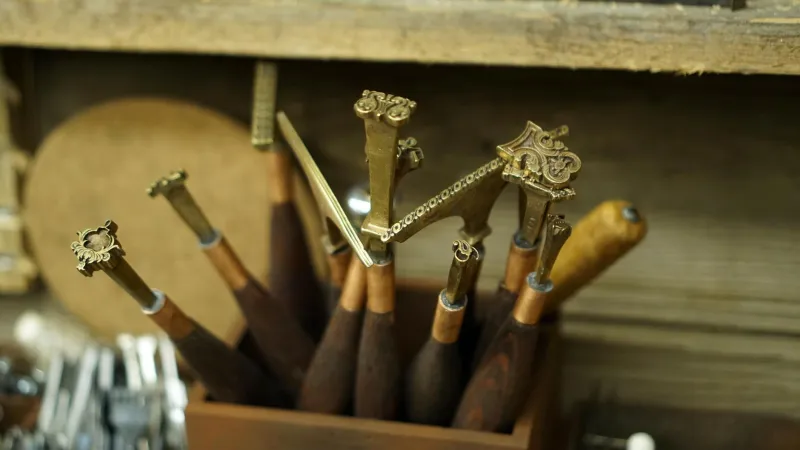
In a narrow lane behind Totnes market, Eleanor Fitzpatrick is applying gold leaf with the same techniques her great-grandfather used in 1920s London. Each sheet, thinner than tissue paper, requires absolute stillness and breath control. One wrong move and hours of preparation vanish in a flutter of precious metal.
 Photo: Eleanor Fitzpatrick, via cache.legacy.net
"People think this is nostalgia," she says, pausing to examine a Victorian mirror frame that's been stripped back to bare wood. "But I'm booked solid for the next four months. There's nothing nostalgic about paying the mortgage."
Eleanor's workshop represents something unexpected happening across Devon's creative economy. Traditional crafts that seemed destined for museum displays are experiencing genuine commercial revival, driven not by heritage tourism but by customers who've grown tired of mass-produced mediocrity.
The Economics of Patience
The numbers tell a compelling story. Eleanor's hand-gilded frames sell for £200-£800, depending on complexity. A machine-produced equivalent might cost £30 in a high street store, but it won't last five years. Her frames, properly maintained, will outlive their owners.
"It's not about being expensive," explains master bookbinder James Crawford, whose workshop in Dartmouth has seen demand triple since 2019. "It's about cost per year of ownership. A hand-bound book lasts centuries. A perfect-bound paperback starts falling apart after six months."
 Photo: James Crawford, via media.taftlaw.com
James learned his craft through what he calls 'archaeological reconstruction' – studying surviving examples in the British Library and reverse-engineering techniques that died out during the industrial revolution. His leather-bound journals now sell to clients across Europe, many of them digital professionals seeking tangible alternatives to screen-based work.
The Letterpress Underground
In a former Methodist chapel near Buckfastleigh, the rhythmic thump of a 1960s Heidelberg press marks time like a mechanical heartbeat. Sarah Blackwood acquired the machine three years ago when a commercial printer in Exeter went digital. Now she's part of a small but growing network of letterpress operators serving clients who've rediscovered the tactile appeal of properly printed paper.
"Wedding invitations are our bread and butter," she admits, adjusting the pressure for a run of business cards. "But we're also printing limited edition books, art prints, even restaurant menus. People notice the difference immediately."
The difference is both visual and physical. Letterpress creates a subtle impression in the paper, a three-dimensional quality that digital printing can't replicate. In an attention economy dominated by fleeting digital images, these physical artefacts command premium prices precisely because they demand to be handled, examined, kept.
The Frame Game
Picture framing might seem like a modest trade, but master framers like David Henley in Kingsbridge are discovering that their skills translate into surprising markets. High-end galleries, private collectors, and conservation projects all require framing expertise that goes far beyond cutting mitres and fitting glass.
"Modern frames are basically furniture," David explains, showing off a conservation mount he's preparing for a 17th-century map. "Acid-free boards, UV-filtering glass, climate-controlled backing systems. This isn't carpentry – it's preservation science."
David learned traditional techniques through the Guild of Master Craftsmen, an organisation that's seen membership grow by 40% in the past five years. The guild system, which traces its roots to medieval trade associations, provides structured apprenticeships and quality standards that ensure genuine skill development.
The Apprentice Advantage
What makes these revivals particularly significant is their approach to knowledge transfer. Unlike hobby courses or YouTube tutorials, traditional guild training emphasises years-long apprenticeships that develop both technical skill and business acumen.
Tom Bradley, 26, is two years into a bookbinding apprenticeship with James Crawford. He previously worked in digital marketing but grew frustrated with what he calls 'the disposability of everything.'
"I wanted to make things that mattered," he explains, carefully sewing signatures for a custom photo album. "In marketing, you create something and it's obsolete in six months. These books will still be here in 200 years."
The apprenticeship model also addresses a practical problem facing many traditional crafts: aging practitioners with no obvious successors. By formalising knowledge transfer and providing clear career paths, the guild system ensures these skills survive their current masters.
Market Forces
The economic drivers behind this revival are complex but compelling. Rising disposable incomes among professional classes have created markets for premium handmade goods. Environmental concerns make durable, repairable items increasingly attractive. And perhaps most significantly, digital saturation has generated appetite for tangible, physical experiences.
"Our customers aren't Luddites," points out Eleanor Fitzpatrick, whose client list includes tech entrepreneurs and social media managers. "They're people who spend all day staring at screens and want something real to put on their walls."
This isn't anti-technology sentiment – it's complementary consumption. The same people buying hand-gilded frames are also early adopters of digital innovations. They understand both worlds and choose traditional crafts precisely because they offer something digital production cannot: the irreplaceable evidence of human skill and time.
The Future of Old Ways
Whether this revival represents temporary fashion or permanent shift remains unclear. But the craftspeople themselves are cautiously optimistic. They've found sustainable business models that don't depend on heritage grants or tourist spending. Their customers are repeat buyers who value quality over convenience.
More importantly, they're proving that traditional skills can adapt to contemporary markets without compromising their essential character. Hand-gilding techniques developed for Victorian picture frames work equally well on modern architectural elements. Bookbinding methods perfected for religious texts create stunning portfolios for graphic designers.
"People always ask if we're worried about being replaced by machines," laughs Sarah Blackwood, cleaning ink from her letterpress. "But machines have been around for 200 years. We're still here because some things can't be automated. Some things shouldn't be."
In workshops across Devon, master craftspeople are quietly demonstrating that the future might need the past more than anyone expected. Their success suggests that in a world of infinite digital reproduction, the irreproducible human touch becomes not just valuable, but essential.