The Last Sentinels
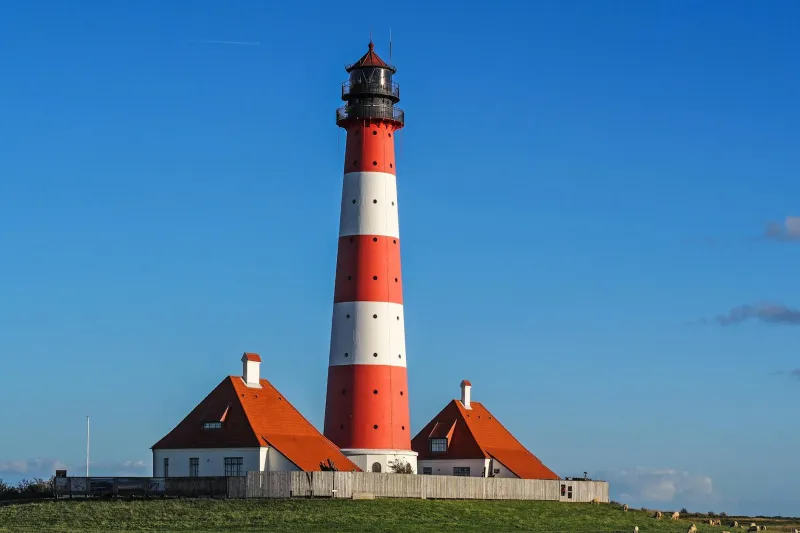
As dawn breaks over Start Point, Michael Thornton climbs the winding stairs of the lighthouse one more time. At 73, he's been making this ascent three times a week for the past fifteen years, checking the automated systems, cleaning the lens, and maintaining the Victorian ironwork that has guided ships safely past these treacherous rocks since 1836.
"People think it's all done by computers now," Thornton says, adjusting his weather-beaten cap against the morning breeze. "But someone still needs to be here when the storms hit, when the power fails, when the salt spray builds up on the lens. These lights have saved thousands of lives over the years—they deserve better than being left to rot."
Thornton is part of a shrinking brotherhood of volunteer lighthouse keepers scattered along Devon's 400-mile coastline. From the towering beacon at Lundy Island to the modest daymarks dotting the South Hams, these men and women—mostly men, mostly retired—have taken on the responsibility of maintaining structures that Trinity House, the official lighthouse authority, no longer considers essential.
A Calling Beyond Logic
The numbers tell a stark story. In 1960, Devon had 47 active lighthouse keepers employed full-time across the county's maritime installations. Today, fewer than a dozen volunteers regularly maintain the county's historic beacons, and their average age is approaching 70.
For James Blackwood, who tends the lighthouse at Prawle Point, the motivation goes beyond mere preservation. "My grandfather was a keeper here in the 1940s," he explains, polishing brass fittings that gleam despite their age. "He used to tell me stories about the convoys during the war, how they'd watch for German U-boats from up here. This place holds memories that GPS can never replace."
Blackwood, a former merchant marine officer, took early retirement specifically to volunteer at Prawle Point. The lighthouse was decommissioned in 1988, its Fresnel lens replaced by a simple LED beacon on a nearby pole. But Blackwood and his small team of helpers have kept the Victorian structure immaculate, opening it to visitors during summer months and maintaining the clockwork mechanism that once rotated the massive lens.
"We're not just preserving buildings," he insists. "We're keeping alive a way of life, a relationship with the sea that modern technology has made us forget."
The Weight of Responsibility
The commitment required is substantial. Sarah Mitchell, one of only three women currently serving as volunteer lighthouse keepers in Devon, splits her time between her job as a marine biologist and maintaining the beacon at Bolt Head. Her routine includes weekly inspections, monthly deep cleaning sessions, and emergency call-outs when storms damage the structure or its equipment.
"Last winter, I was out here at 2 AM in a Force 8 gale because the wind had torn off part of the weather protection around the light," Mitchell recalls. "My family thinks I'm slightly mad, and perhaps they're right. But when you see that beam cutting through the darkness, when you know it's helping someone find their way home safely—that makes all the cold nights worthwhile."
The financial burden falls entirely on the volunteers and the small heritage groups they've formed. Mitchell estimates she spends around £300 per year of her own money on materials and equipment, while fundraising events barely cover the cost of major repairs. "We had to replace the lighthouse door last year—£1,200 for a historically accurate replica. That's a lot of cake sales and sponsored walks."
Racing Against Time
The urgency of their mission becomes clearer with each passing year. Several of Devon's historic lighthouses have already been lost to neglect or development. The lighthouse at Exmouth was demolished in 1969, while the beacon at Torquay was converted into a private residence. Others stand empty, their windows boarded up, their paint peeling in the salt air.
"We're fighting a battle on two fronts," explains Dr. Helen Carpenter, a maritime historian who has documented Devon's lighthouse heritage. "First, there's the simple matter of physics—salt air, wind, and rain are relentless enemies of any structure. But more challenging is the battle for relevance. In an age where every fishing boat has GPS and radar, many people see lighthouses as quaint relics rather than important cultural landmarks."
Trinity House, while supportive of volunteer efforts, makes clear that their responsibility extends only to operational navigation aids. "We appreciate the work these volunteers do," says spokesperson Richard Hayes, "but our mandate is maritime safety, not heritage preservation. If communities want to maintain decommissioned lighthouses, that's a local decision."
A Beacon for the Future
Despite the challenges, there are signs of hope. The lighthouse at Berry Head, maintained by a group of volunteers led by retired engineer Peter Walsh, attracted over 15,000 visitors last year. Revenue from guided tours and the small gift shop now covers basic maintenance costs, while school groups regularly visit to learn about maritime history.
"The younger generation is fascinated when they understand what these places represent," Walsh observes. "They've grown up with smartphones and satellite navigation, so the idea of using light and timing to navigate by seems almost magical to them."
Several volunteers are exploring partnerships with local councils and heritage organisations to secure long-term funding. The National Trust has expressed interest in taking over some sites, while others are being considered for community ownership schemes.
The Light Endures
As evening approaches at Start Point, Michael Thornton makes his final rounds, checking that everything is secure for the night. The automated beacon will continue its faithful rotation without him, but his presence here represents something that no amount of modern technology can replicate—the human connection to the sea that has shaped Devon's character for centuries.
"I won't be doing this forever," he admits, looking out over the darkening waters where merchant ships and fishing boats are already beginning to rely on the lighthouse's beam. "But I hope someone will take over when I can't manage the stairs anymore. These lights have been burning for nearly two centuries. It would be a shame to let them go dark on our watch."
For now, the volunteers continue their quiet vigil, standing watch over Devon's maritime heritage one lighthouse at a time. Whether their dedication will be enough to preserve these beacons for future generations remains to be seen, but their commitment ensures that, for now at least, the lights continue to shine.