The Morning Ritual
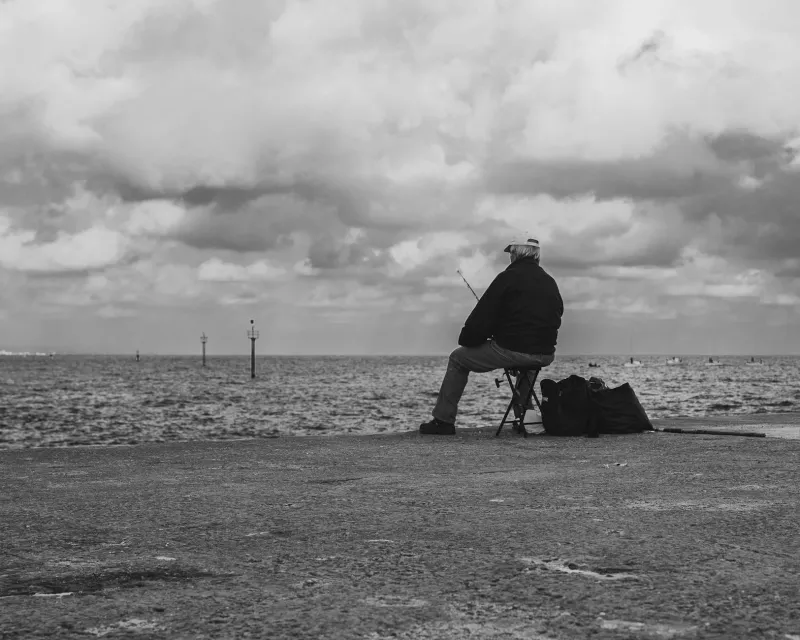
At half past four on a grey December morning, Tommy Blackstone steps out of his Brixham cottage and tilts his weathered face skyward. No iPhone in sight, no BBC Weather app loading on a glowing screen. Instead, he's reading clouds like scripture, feeling the wind's subtle shifts against his cheek, watching how the gulls ride the air currents above the harbour.
"See that mackerel sky there?" he points to the high, rippled clouds catching the first hint of dawn. "That's telling me we've got maybe six hours of decent weather, then it'll turn rough from the southwest. The old-timers taught me: mackerel skies and mare's tails make tall ships carry low sails."
Tommy, 67, is part of a vanishing breed. Across Devon's fishing ports—from Dartmouth to Brixham, Salcombe to Beer—a handful of seafaring families still possess the ancient art of weather reading, knowledge passed down through generations without ever being written down.
Living Libraries Under Threat
Dr Sarah Pemberton from the University of Exeter's Maritime History Department has been quietly documenting these oral traditions for the past three years. Her research reveals just how sophisticated this indigenous knowledge really is.
"These men—and they are predominantly men, reflecting the historical gender roles in fishing—can predict weather patterns with remarkable accuracy," she explains. "They're reading atmospheric pressure through cloud formations, wind patterns, even the behaviour of seabirds. It's meteorology without instruments, refined over centuries."
The urgency of her work became clear when she realised how few practitioners remain. "In Dartmouth alone, I've identified perhaps eight individuals with comprehensive weather-reading skills. The youngest is 54. When they're gone, centuries of accumulated wisdom goes with them."
The Art of Sky Reading
Jim Holworthy, a fourth-generation Dartmouth fisherman, demonstrates the complexity of this knowledge during our early morning walk along the Butterwalk. He points to a bank of clouds gathering over the moors.
"Those clouds are building from the land, not the sea—means the pressure's dropping inland. Combined with this easterly breeze that's been steady for two days, we'll have rain by teatime, clearing overnight. Tomorrow will dawn bright but windy."
His predictions are based on a mental library of patterns: the colour of the dawn sky ("red sky at night, sailor's delight" isn't just folklore), the way smoke rises from chimneys, the restlessness of harbour cats, even the scent of the air.
"My grandfather could smell rain coming from twenty miles away," Jim recalls. "Said it was the iron in the water, carried on the wind. Thought he was having me on until I started noticing it myself."
Beyond Folklore
What fascinates researchers is how often these traditional methods outperform modern forecasting, particularly for highly localised conditions. The Met Office might predict 'scattered showers' for South Devon, but Tommy can tell you which side of Dartmouth will stay dry and which will be drenched.
"The landscape creates its own weather patterns," explains meteorologist Dr Claire Ashworth, who has been comparing traditional predictions with modern data. "These fishermen understand microclimates in a way our computer models struggle with. They know how the hills around Dartmouth channel wind, how the river affects local humidity, how the tide influences atmospheric pressure."
She's particularly impressed by their ability to predict the notorious Devon fog. "They read subtle signs—the way sound carries across water, how the moon looks through the atmosphere—that our instruments miss."
Racing Against Time
The knowledge is disappearing for predictable reasons. Younger fishermen rely on satellite navigation and digital weather forecasts. The economics of fishing have changed, with many boats now staying in port during marginal weather rather than taking risks.
"My son uses an app," sighs Jim. "Can't blame him—it's easier, more reliable for planning. But when you're out there and the conditions change suddenly, you need to read what's actually happening, not what a computer predicted six hours ago."
Dr Pemberton's documentation project involves not just interviews but practical demonstrations. She accompanies fishermen on trips, recording their real-time weather reading and comparing it with actual conditions. The accuracy rates are startling—often exceeding 80% for 24-hour local forecasts.
Preserving the Wisdom
The Dartmouth Museum has begun collecting these oral traditions, working with local families to create audio archives. Museum director Helen Matthews sees it as cultural preservation on par with protecting historic buildings.
"This knowledge represents thousands of years of human observation," she says. "It's as much part of our maritime heritage as the ships in our harbour. Once it's lost, it's gone forever."
Some younger fishermen are beginning to pay attention. Mark Holworthy, Jim's nephew, admits he's started asking more questions during family gatherings.
"Uncle Jim will glance at the sky and say, 'Don't bother going out Tuesday'—and he's always right. I'm starting to think maybe I should learn this stuff properly, just in case."
The Weather Makers
As climate change makes weather patterns increasingly unpredictable, the value of local, nuanced knowledge becomes even more apparent. These Devon weather readers don't just predict the weather—they understand it as a living system, shaped by geography, season, and countless subtle variables.
Tommy Blackstone puts it simply: "The sky's always talking to you. Most people just don't know how to listen anymore."
Whether their ancient wisdom can survive in our digital age remains to be seen. But for now, on harbours across Devon, a few weathered faces still turn skyward each dawn, reading tomorrow's story in today's clouds.