When the Stage Rocks With the Tide
The gentle creak of timber mingles with the opening chords of a guitar as the sun dips behind the Kingswear hills. Aboard the restored 1960s motor yacht Serendipity, thirty music lovers find themselves part of something entirely new – a concert that literally moves with the rhythm of the River Dart.
This isn't your typical Saturday night gig. There's no sticky carpet, no overpriced pints, and certainly no shouting over the din of a packed venue. Instead, audiences sway not just to the music, but with the gentle motion of the water beneath their feet, creating an intimacy between performer and listener that landlubbers rarely experience.
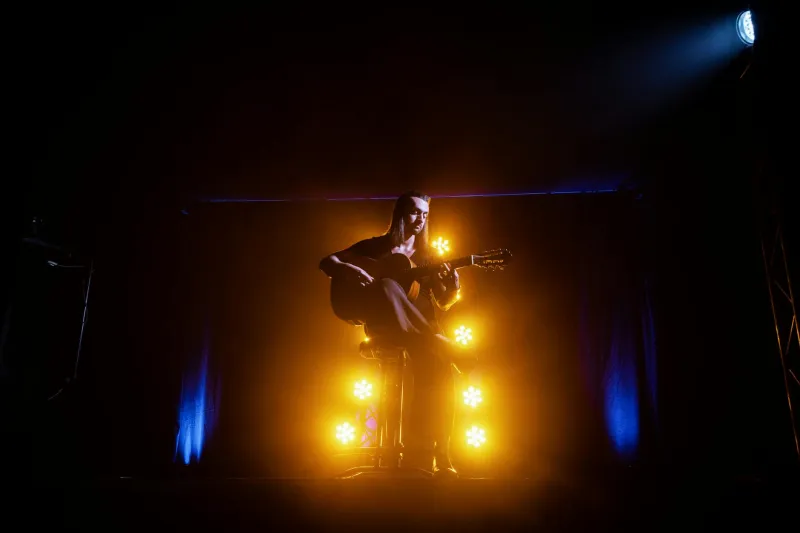
"The first time I played on deck, I thought the boat movement would throw me off," explains Charlie Westbrook, a singer-songwriter from Totnes who's become something of a regular on Dartmouth's floating circuit. "But there's something magical about performing when you're literally connected to the elements. The acoustics change with the wind, the atmosphere shifts with the tide – it's like nature becomes part of your backing band."
The Captains of Sound
The movement began almost by accident three years ago when local promoter Sarah Mitchell found herself struggling to book affordable venues for emerging artists. Traditional spaces were either prohibitively expensive or already dominated by tribute acts and karaoke nights. Her solution? Her family's 45-foot cruiser, moored at Mill Creek.
"I started with acoustic sessions for maybe eight people," Mitchell recalls, adjusting the solar-powered PA system that's become her trademark. "Word spread through the local music community, and suddenly we had folk paddling out in dinghies just to listen from the water."
What began as necessity has evolved into something approaching an art form. Mitchell now coordinates performances across a small fleet of vessels, from the elegant lines of restored Brixham trawlers to the industrial charm of converted pilot boats. Each vessel offers its own acoustic signature – the deep resonance of a steel hull, the warm tones that bounce off varnished wood, or the crisp clarity that comes from performing on an open deck under the stars.
The logistics would challenge even the most experienced tour manager. Tidal charts become as important as set lists, with performances timed around high water to ensure audiences can board safely. Equipment must be weatherproofed, power sources carefully managed, and emergency procedures rehearsed for everything from sudden squalls to the occasional curious seal.
Audiences Adrift
For those who've experienced these floating concerts, the appeal goes far beyond novelty. Emma Thornton, a regular attendee from Plymouth, describes the sensation as "like being inside the music rather than just listening to it."
"When you're sitting on a boat at sunset, with the water lapping against the hull and maybe a cormorant diving nearby, the whole experience becomes meditative," she explains. "I've seen artists perform songs I know well, but they sound completely different when there's that connection to the natural world."
The intimate scale – most vessels accommodate between twenty and fifty people – creates an atmosphere that's increasingly rare in today's entertainment landscape. Mobile phones tend to stay in pockets, conversations happen in whispers between songs, and the boundary between performer and audience dissolves in ways that traditional venues rarely achieve.
Local musician Tom Bradley, who's performed both on water and on land, notes the difference immediately. "On a boat, people really listen. There's no bar to escape to, no distractions. It's just you, the music, and this shared experience of being gently rocked by the tide."
Navigating the Red Tape
Of course, staging live music on water brings challenges that landlocked venues never face. Maritime law, licensing requirements, and health and safety regulations create a complex web of bureaucracy that would daunt many promoters.
Mitchell has become something of an expert in the arcane world of marine entertainment licensing. "You need different permissions depending on whether you're moored, anchored, or under way," she explains. "Then there's passenger limits, life jacket requirements, and insurance considerations that most music venues never think about."
The local harbour authority, initially sceptical of the concept, has gradually warmed to the idea. Harbour Master James Crawford admits that the boat concerts have become an unexpected draw for visitors to the area.
"What we're seeing is a new form of cultural tourism," Crawford observes. "People are coming to Dartmouth specifically for these experiences, staying in local accommodation, eating in our restaurants. It's heritage and innovation working hand in hand."
The Ripple Effect
The success of Dartmouth's floating music scene hasn't gone unnoticed elsewhere. Similar initiatives are beginning to appear in harbours across the Southwest, from Fowey to Salcombe. Musicians who might once have struggled to find audiences are discovering that the combination of intimacy and novelty draws listeners from across the region.
For some artists, the boat gigs have become more than just alternative venues – they're inspiring new ways of thinking about performance itself. Bristol-based folk duo The Tideline Collective recently released an album recorded entirely at sea, capturing not just their music but the ambient sounds of wind, water, and wildlife.
"The boat gigs taught us that music doesn't have to be separate from its environment," explains vocalist Rachel Stone. "When you're performing with the sound of the tide in the background, you start to see your songs as part of something bigger."
Charting New Waters
As Dartmouth's floating music scene enters its fourth year, the organisers are already looking ahead. Plans are in place for a floating folk festival, with multiple vessels hosting simultaneous performances across the harbour. There's talk of collaborating with the Britannia Royal Naval College to stage classical concerts aboard visiting tall ships.
But perhaps the most significant impact is the way these boat concerts are changing expectations about live music experiences. In an age of streaming and social media, they offer something that can't be replicated online – a genuine connection between artist, audience, and place.
"When people leave one of our concerts, they're not just talking about the music," Mitchell reflects, watching the last audience members disembark as the evening tide turns. "They're talking about the whole experience – the setting, the intimacy, the sense of being part of something special. That's what live music should be about."
As the Southwest continues to establish itself as Britain's most innovative cultural region, these floating concerts represent something uniquely local yet universally appealing. They're a reminder that sometimes the most radical innovations come from simply looking at familiar things – music, boats, community – from a different angle.
In Dartmouth, that angle happens to be from the water, where every performance becomes a small voyage of discovery.