The Living Tapestry Under Threat
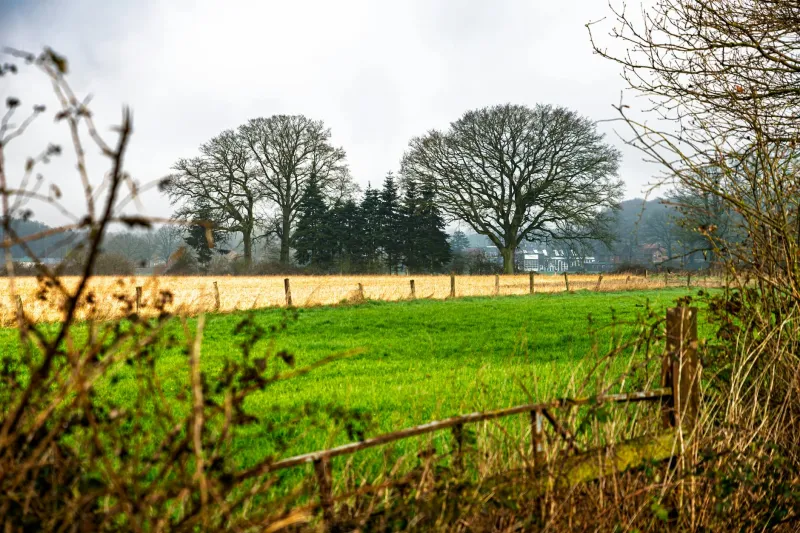
Stand at any vantage point across Devon's undulating landscape and you'll see them: the green veins that thread through our fields like ancient arteries, marking boundaries that have remained unchanged since before the Norman Conquest. These aren't mere garden hedges, but complex ecosystems woven from hawthorn, blackthorn, and ash, some standing sentinel for over a millennium.
Yet this living heritage faces a crisis. In the past fifty years, Britain has lost nearly half of its hedgerows, with Devon suffering particularly heavy losses. What took centuries to establish can disappear in an afternoon, taking with it not just the physical boundary but entire communities of wildlife and generations of agricultural wisdom.
The Art of the Blade
On a crisp morning near Totnes, I meet Sarah Whitfield, one of Devon's few remaining professional hedgelayers. Her hands, weathered by decades of outdoor work, move with practiced precision as she demonstrates the ancient craft that's becoming increasingly rare.
"People think it's just cutting back a hedge," she explains, selecting a young hazel shoot. "But traditional hedgelaying is sculpture, engineering, and ecology all rolled into one." She bends the stem at a precise angle, creating what hedgelayers call a 'pleacher' – a living hinge that will continue to grow while forming an impenetrable barrier.
The technique she's using dates back centuries, passed down through generations of agricultural workers who understood that a properly laid hedge would last decades, growing stronger with age rather than weaker. It's a stark contrast to the mechanical flailing that has replaced traditional methods on many farms, leaving hedgerows weakened and wildlife-poor.
More Than Boundaries
Dr. James Fletcher, an ecologist from Plymouth University, has spent years studying Devon's hedgerow network. His research reveals what many suspected: these green corridors are biodiversity superhighways, supporting species that simply cannot survive in the intensively managed fields between them.
"A single mile of traditional Devon hedge can support over 2,000 species," he tells me as we walk along a particularly ancient example near Dartmouth. "We're talking about bats using them as navigation routes, rare plants that exist nowhere else in the county, and bird populations that depend entirely on the berries and insects these hedgerows provide."
The hedgerows also serve as living libraries, their plant communities telling the story of local geology, climate, and agricultural practices. Some contain species that are remnants of the wildwood that once covered Devon, making them among our oldest surviving ecosystems.
Champions of Change
Fortunately, the story isn't entirely one of decline. Across Devon, an unlikely alliance is forming to revive both the craft and the landscape it creates. The South West Hedgelaying Society, once a dwindling group of elderly enthusiasts, has seen membership triple in the past five years as younger people discover the satisfaction of working with living materials.
Tom Henderson, a former software developer from Exeter, discovered hedgelaying during lockdown and hasn't looked back. "There's something deeply satisfying about working with your hands to create something that will outlast you," he says, taking a break from laying a hedge near Buckfastleigh. "Plus, every hedge you restore becomes a wildlife corridor. You're literally knitting the landscape back together."
The movement has found unexpected allies in the farming community. While some landowners still see hedges as obstacles to efficient farming, others are recognising their value for soil protection, water management, and increasingly, carbon storage.
Government Gold and Grassroots Grit
The tide may be turning at policy level too. Recent changes to agricultural subsidies now reward farmers for environmental stewardship rather than just production, making hedge restoration financially viable for many landowners for the first time in decades.
Local councils are also getting involved. South Hams District Council recently launched a hedgerow mapping project, using volunteers to record the condition and wildlife value of boundaries across their patch. The data will inform planning decisions and help identify priority areas for restoration.
Learning from the Past, Building for the Future
At Schumacher College near Totnes, traditional skills courses are attracting students from across Europe eager to learn hedgelaying techniques. The college's approach combines ancient wisdom with modern conservation science, teaching participants not just how to lay a hedge, but why the landscape needs them.
"We're not trying to recreate the past," explains course leader Mark Davies. "We're taking the best of traditional knowledge and applying it to today's challenges. Climate change, biodiversity loss, soil degradation – hedgerows can help with all of these."
The View from Here
As I watch Sarah Whitfield put the finishing touches to her morning's work, the transformed hedge already looks different – tidier, certainly, but also somehow more alive, more purposeful. In a few years, this boundary will be thick and impenetrable, home to countless creatures and a testament to human partnership with the natural world.
The fight to save Devon's hedgerows isn't just about preserving the past – it's about creating a future where our countryside can support both people and wildlife. In an age of industrial agriculture and urban sprawl, these ancient boundaries offer a different vision: one where the landscape itself becomes a work of art, crafted by countless hands across countless generations.
The hedgelayers working across Devon today aren't just maintaining boundaries; they're weaving together the threads of a landscape that defines who we are. And perhaps, in learning to bend without breaking, to grow stronger through careful cutting, they're teaching us something about resilience that goes far beyond the fields.