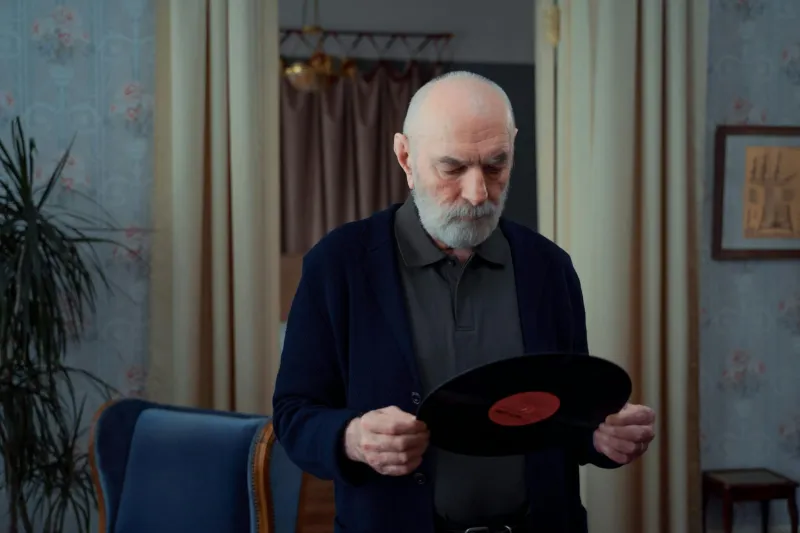
Ninety-three-year-old Arthur Blackmore pauses mid-sentence, his weathered hands gripping the sides of his kitchen chair as he searches for a word that exists nowhere else on earth. "'Twas proper... proper..." He clicks his tongue in frustration. "Blast it, what's the word? My father would've had it ready."
Dr. Sarah Jennings leans forward encouragingly, her digital recorder capturing every hesitation, every half-remembered phrase. She's spent three years visiting Arthur's cottage near Buckfastleigh, documenting the remnants of a dialect that once rang out across Devon's markets, fields, and firesides. Today might be their final session.
"The word you're looking for is 'mazed'," Arthur finally recalls, his face brightening. "Proper mazed, that's what we'd say. Not confused or befuddled—mazed. There's a difference, see, but I can't rightly explain it anymore."
This is the heartbreaking reality facing Devon's dialect preservation project: even native speakers struggle to articulate distinctions that once came naturally, linguistic nuances fading like watercolours left in sunlight.
Words on the Wind
The Devon Dialect Archive, housed at Exeter University but sustained by volunteers across the county, estimates that fewer than 200 native speakers of traditional Devon dialect remain. Most are over eighty, their linguistic inheritance shaped by grandparents born in Victoria's reign.
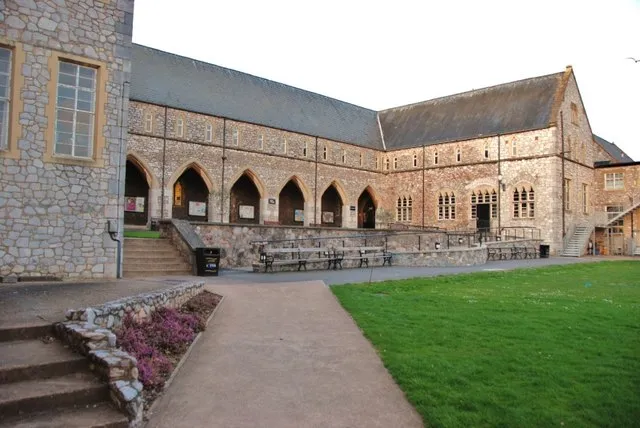 Photo: Exeter University, via s0.geograph.org.uk
"We're not talking about accent or the occasional regional word," explains Dr. Jennings, who leads the preservation effort. "Traditional Devon dialect had its own grammar, syntax, and vocabulary that reflected a completely different way of understanding the world."
Consider 'dreckly'—perhaps Devon's most famous linguistic export. Most assume it simply means 'directly' or 'soon', but Arthur explains the subtle gradations: "Dreckly meant different things depending on how you said it. 'I'll be there dreckly' might mean five minutes or five hours. 'Dreckly, my lover' was different again—that was gentle postponement, letting someone down easy."
These distinctions matter because they encode cultural values. Devon dialect emerged from agricultural communities where time moved differently, where relationships mattered more than schedules, where the natural world shaped human rhythm rather than the reverse.
The Grammar of Belonging
Traditional Devon speech patterns reveal fascinating insights into historical social structures. The persistent use of 'he' for inanimate objects ('Where's he to?', referring to a lost tool) suggests a worldview where everything possessed agency and personality.
Mary Westcott, eighty-seven, from a farm near Dartington, demonstrates this unconsciously: "The old tractor, he's been playing up something chronic. I told my grandson, 'You treat he proper, and he'll treat you proper back.'"
This grammatical quirk isn't random—it reflects animistic thinking common in pre-industrial societies, where tools, animals, and landscape were partners rather than possessions.
Similarly, the Devon tendency to add '-y' to names and objects ('horsey' for horse, 'doggy' for dog, regardless of size or age) suggests a culture of affection and intimacy extending beyond human relationships.
The Collectors
The race to preserve these linguistic treasures has created an unlikely community of academics, amateur historians, and passionate locals. Margaret Dunn, a retired primary school teacher from Ashburton, has spent fifteen years recording conversations with elderly neighbours, building an archive of over 300 hours of authentic speech.
"People think I'm daft, spending my pension on recording equipment," Margaret laughs. "But when old Mrs. Yelland used words her grandmother taught her, I knew I was hearing something precious. Something that would die with her if nobody bothered to listen."
Margaret's recordings reveal the emotional weight of linguistic loss. Speakers often become distressed when unable to recall specific terms, feeling they're failing ancestral memory. "It's like losing family photographs," one interviewee explained. "Part of who we are just... disappears."
The technical challenges are immense. Traditional dialect wasn't standardised, varying significantly between villages separated by mere miles. Pronunciation, vocabulary, and usage shifted according to social context, making systematic documentation fiendishly complex.
Digital Archaeology
Modern technology offers both salvation and frustration. Digital recording preserves speech patterns impossible to capture in written form, but algorithms struggle with dialectal variations. Automatic transcription software, trained on standard English, produces gibberish when processing authentic Devon speech.
"The computers don't know what to do with 'gurt' or 'mazed' or 'proper job'," explains Dr. Jennings. "We're essentially doing digital archaeology, rescuing linguistic artefacts before they vanish completely."
The project has digitised over 1,000 hours of recordings, creating an online archive accessible to researchers worldwide. Unexpectedly, this has attracted international attention. Linguists studying Celtic language influences have found Devon dialect preserves speech patterns lost elsewhere in England.
Why It Matters
Skeptics question whether dialect preservation deserves public funding when resources are stretched. Why mourn the loss of outdated communication when modern English serves perfectly well?
The answer lies in what linguists call 'cognitive diversity'. Different languages literally wire brains differently, creating varied approaches to problem-solving, creativity, and understanding. Losing dialects impoverishes human thinking as surely as losing species impoverishes ecosystems.
More locally, dialect loss represents cultural homogenisation. Devon's distinctive identity, built over centuries of relative isolation, risks dissolving into generic 'Englishness'. The county's tourism industry, ironically, markets precisely this distinctiveness while contributing to its erosion.
The Young Inheritors
Surprisingly, young people show growing interest in dialect preservation. Dartmouth Community College runs workshops where teenagers learn traditional phrases from elderly volunteers. TikTok videos featuring Devon dialect have garnered millions of views, suggesting appetite for linguistic diversity among digital natives.
"Young people understand they're inheriting a diminished world," observes Dr. Jennings. "They've lost so much already—high street shops, affordable housing, career certainty. Perhaps preserving dialect feels like reclaiming something."
Sixteen-year-old Emma Blackmore, Arthur's great-granddaughter, recently started learning phrases her ancestor took for granted. "It's like discovering secret family treasure," she explains. "These words carry stories nobody else knows."
Against Time
Arthur Blackmore passed away six weeks after our visit, taking with him pronunciations and phrases nobody else remembered. His final recorded words were advice to Emma: "Keep they old words alive, my bird. They'm part of who we are."
Dr. Jennings estimates the project has perhaps five years before native speakers become too few to provide comprehensive coverage. After that, Devon dialect will exist only in recordings and memories—linguistic amber preserving something once vibrantly alive.
"We're not trying to resurrect the past," she emphasises. "We're documenting human creativity, the remarkable ways communities adapt language to express their unique experience of being alive in a particular place."
In village halls across Devon, volunteers continue gathering words like autumn harvest, racing winter's approach. Each recorded conversation, each carefully transcribed phrase, each digitised memory represents a small victory against forgetting.
The dialect may be dying, but its preservation ensures that future generations will hear the authentic voice of Devon, speaking truths that exist nowhere else in the world. In Arthur's words, that's "proper job" indeed.