Canvas, Clay and Coastline: How Devon's Creative Revolution is Reshaping British Art
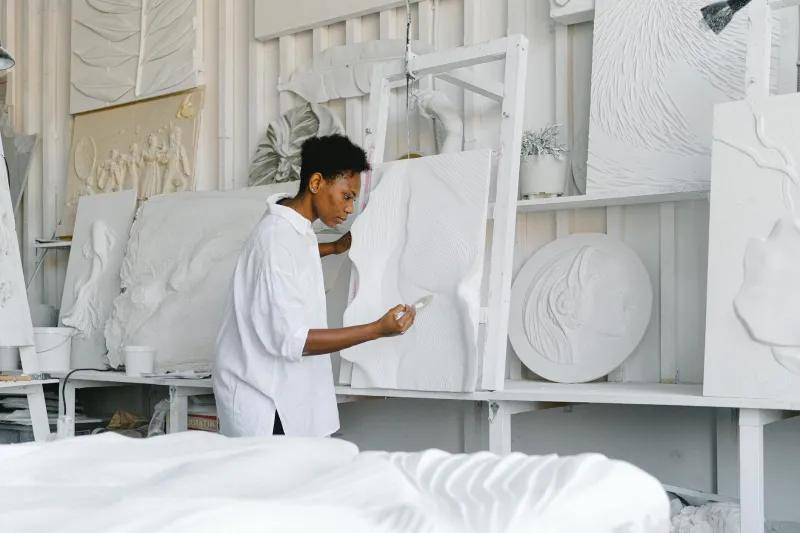
When textile artist Rebecca Chen swapped her cramped Bethnal Green studio for a converted barn overlooking the Dart Estuary, her London friends predicted creative isolation and commercial suicide. Three years later, her work hangs in Tate Modern's permanent collection, her waiting list stretches eighteen months, and her Instagram followers include some of contemporary art's biggest names.
Chen isn't alone. Across Devon and Cornwall, a quiet revolution is transforming abandoned farm buildings into world-class studios, village halls into cutting-edge galleries, and sleepy market towns into unlikely art destinations. This isn't the familiar narrative of metropolitan artists seeking rural inspiration for weekend watercolours. This is something far more significant: the emergence of Southwest England as a genuine alternative to London's increasingly unaffordable creative ecosystem.
The Great Migration
The numbers tell their own story. According to Arts Council England, the Southwest has seen a 40% increase in registered artists since 2019 – the highest growth rate of any UK region. More tellingly, 60% of these new arrivals previously worked in London, Manchester, or Birmingham.
"The pandemic was the catalyst, but the foundations were already there," explains Dr. Miranda Walsh, who tracks creative economy trends at Exeter University. "Suddenly, artists realised they could maintain international connections whilst dramatically reducing their overheads. A studio that costs £800 per month in East London might cost £200 here – and come with parking, natural light, and views that inspire rather than depress."
The migration began with painters and sculptors seeking space and light, but has evolved into something more sophisticated. Printmakers, ceramicists, textile artists, and digital creators are establishing practices that rival anything emerging from London's traditional creative quarters.
Dartmouth's Unlikely Art Hub
Walk down Foss Street on any weekday morning and you'll witness this transformation firsthand. What was once a row of struggling independent shops has become an impromptu artists' quarter. The old chandlery now houses three separate studios, the former bakery showcases contemporary ceramics, and the upstairs rooms above the bookshop echo with the gentle thrum of printing presses.
James Morrison's journey typifies this new creative migration. A successful graphic designer who spent fifteen years building a client base around Shoreditch's coffee shops and co-working spaces, he relocated to Dartmouth in 2020 when his lease doubled overnight.
"I expected to struggle," Morrison admits, showing me around his airy studio overlooking the Butterwalk. "London clients, London networks, London opportunities – how could anywhere else compete? But within six months, I was busier than ever. Turns out, creativity isn't postcode-dependent."
Morrison's client list now includes major brands who specifically seek his 'Southwest aesthetic' – work that somehow captures the region's particular quality of light, its unhurried confidence, its blend of tradition and innovation. His recent campaign for a sustainable fashion brand, shot entirely around Dartmouth's medieval streets and contemporary studios, won three design awards and spawned dozens of imitators.
"There's something about working here that changes your perspective," he reflects. "You're not competing with the studio next door for the same brief. You're not rushing between meetings on the tube. You have time to think, space to experiment, and a quality of life that feeds back into the work."
The Kingswear Collective
Across the Dart, the village of Kingswear hosts perhaps the Southwest's most ambitious artistic experiment. The Kingswear Collective occupies a former railway goods shed, transformed into studios for twelve resident artists working across disciplines from bronze casting to digital installation.
Founded by sculptor Anna Hartley, who abandoned a successful Camden practice in 2018, the Collective operates on principles that would seem naive in London's competitive art world. Studios are allocated by artistic merit rather than ability to pay. Residents share resources, knowledge, and connections. Monthly open studios attract visitors from across Europe, whilst quarterly exhibitions regularly sell out.
"In London, I was constantly defending my practice, justifying my existence, competing for crumbs," Hartley explains, her hands still dusty from morning's work on a commission for Winchester Cathedral. "Here, we lift each other up. Sarah's ceramics inspire my sculptures, James's photography informs Anna's installations, and everyone benefits."
The Collective's influence extends far beyond its converted railway shed. Hartley estimates that resident artists have collectively brought over £2 million in commissions to the local area over five years, employed dozens of local craftspeople, and attracted thousands of cultural tourists who stay in local hotels, eat in local restaurants, and shop in local galleries.
Beyond the Holiday Market
What distinguishes this new Southwest art scene from traditional 'chocolate box' regional creativity is its serious commercial and critical ambitions. These aren't hobby painters selling seascapes to tourists – they're professional artists whose work commands serious prices and critical attention.
Textile artist Rebecca Chen's recent solo show at Dartmouth's Butterwalk Gallery sold out within hours, with pieces acquired by collectors from New York, Tokyo, and Berlin. Her work, which incorporates traditional Devon techniques with contemporary conceptual approaches, has been featured in Frieze, Artforum, and Wallpaper magazines.
"The art world is finally recognising that creativity doesn't require a London postcode," Chen observes, surrounded by works that somehow capture the essence of coastal light in woven form. "If anything, the distance provides clarity. I'm not influenced by whatever's trendy in Mayfair galleries – I'm responding to landscape, history, materials, light. The work feels more authentic, more necessary."
The Network Effect
What's emerging across the Southwest is something unprecedented in British regional arts: a self-sustaining creative ecosystem that operates independently of London's traditional gatekeepers. Artists collaborate across disciplines and locations, sharing resources, opportunities, and audiences. Digital platforms enable direct sales to international collectors, whilst improved transport links make visiting easier for curators, critics, and buyers.
The Torbay Contemporary Art Fair, launched in 2022, now attracts galleries from across Europe. The Devon Art Trail connects studios from Exeter to Land's End, creating a cultural tourism circuit that rivals anything in Scotland or Wales. Most significantly, young artists are choosing to study and remain in the region rather than automatically migrating to London.
The Future of British Creativity?
As London rents continue climbing and quality of life declining, the Southwest's creative renaissance may represent more than regional success – it might preview the future of British art itself. When artists can maintain international careers whilst enjoying affordable studios, inspiring landscapes, and genuine community connections, why wouldn't they choose Devon over Dalston?
"We're not anti-London," emphasises James Morrison, watching fishing boats navigate the Dart below his studio window. "We're pro-creativity, pro-sustainability, pro-quality of life. If that happens to be more achievable in Dartmouth than Deptford, then perhaps it's time to question our assumptions about where art happens."
The Southwest's creative revolution is still unfolding, but its impact already extends far beyond regional boundaries. In galleries from Glasgow to Greenwich, curators are beginning to recognise that Britain's most exciting contemporary art might not emerge from familiar urban centres, but from converted barns overlooking ancient harbours, where creativity flows as naturally as the tide.