The Alchemy of Inn Signs
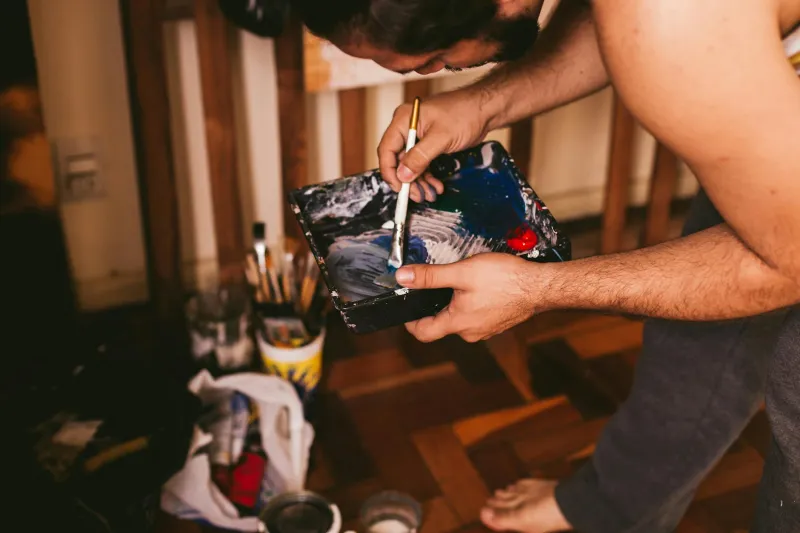
Step into Malcolm Hendricks' cramped studio behind his Totnes cottage, and you're immediately transported into a world where heraldic beasts prowl across wooden canvases and mythical creatures emerge from pools of hand-mixed paint. The 73-year-old craftsman has spent the better part of five decades bringing Devon's pub signs to life, his weathered fingers still steady enough to paint the delicate whiskers on a prowling fox or the intricate scales of a medieval dragon.
"Each sign tells a story," Hendricks explains, gesturing toward a half-finished commission for The White Hart in Buckfastleigh. "This isn't just decoration – it's the visual DNA of a community."
But Hendricks is part of a dying breed. Across the Southwest, the artisans who've maintained this quintessentially British tradition for generations are hanging up their brushes, leaving behind a craft that bridges medieval heraldry, folk storytelling, and commercial art in ways that mass-produced alternatives simply cannot replicate.
Where Heraldry Meets the High Street
The art of pub sign painting stretches back to medieval times, when literacy rates were low and tavern keepers needed visual symbols to identify their establishments. What began as simple pictorial representations evolved into complex works of art that combined heraldic traditions with local folklore and community identity.
"You're not just painting a picture," explains Sarah Whitmore, one of only three traditional sign painters still working regularly in South Devon. "You're interpreting centuries of symbolism, local history, and the personality of the pub itself."
Whitmore, 58, learned her craft from her father, who painted signs throughout the 1960s and 70s. Her workshop in Kingsbridge is filled with the tools of a trade that has changed little over the centuries: wooden palettes worn smooth by decades of use, brushes made from sable hair, and jars of pigment that she still mixes by hand according to recipes passed down through generations of craftspeople.
The process is painstakingly slow. A single pub sign can take weeks to complete, from the initial sketches through multiple layers of base coat, detailed painting, and protective varnishing. Each element must be carefully balanced – the heraldic accuracy of a coat of arms, the anatomical correctness of animals, the legibility of lettering that must remain readable from a distance and in all weather conditions.
The Economics of Extinction
The decline of traditional pub sign painting mirrors broader changes in British pub culture. Chain establishments favour standardised branding, while independent publicans increasingly turn to cheaper vinyl graphics or digitally printed alternatives that can be produced in days rather than weeks.
"I understand the economics," admits Hendricks, whose order book has dwindled from dozens of commissions annually in the 1990s to perhaps half a dozen today. "A hand-painted sign might cost £2,000 and take a month to complete. A printed alternative can be ready in 48 hours for a tenth of the price."
But the false economy becomes apparent over time. Traditional signs, painted with quality materials and techniques refined over centuries, can last decades with proper maintenance. Their mass-produced replacements often fade, crack, or peel within a few years, creating a cycle of replacement that ultimately proves more expensive.
More significantly, something intangible is lost in the transition. The slight imperfections that mark human craftsmanship, the subtle variations in colour that come from hand-mixed paints, the way traditional signs seem to breathe with life – these qualities cannot be replicated by industrial processes.
Apprentices Wanted: Terms and Conditions Apply
Perhaps most concerning is the absence of young people entering the trade. Traditional apprenticeships, once the backbone of craft transmission, have largely disappeared. The few remaining practitioners work alone, their knowledge stored in muscle memory and decades of experience that will vanish when they retire.
"I've tried to take on apprentices," Whitmore says, "but it's difficult to make the economics work. The learning curve is steep, the pay is modest, and young people today have many more career options than previous generations."
The craft requires not just artistic skill but deep knowledge of heraldry, local history, and traditional painting techniques. It's a combination that takes years to master and appeals to an increasingly narrow audience.
Some efforts are being made to preserve the knowledge. The Traditional Sign Painters Guild, established in 2018, has created workshops and documentation projects aimed at recording techniques before they disappear entirely. Several Devon museums have commissioned demonstration projects, allowing visitors to watch craftspeople at work.
Signs of the Times
Walking through Dartmouth's historic streets, the difference between traditional and modern pub signs is immediately apparent. The hand-painted Royal Castle Hotel sign, with its intricate castle battlements and flowing heraldic banners, seems to pulse with character and history. Compare it to newer establishments with their flat, digitally perfect graphics, and you begin to understand what's being lost.
"These signs are part of our streetscape heritage," argues local historian Dr. James Pemberton. "They're as much a part of Devon's visual identity as thatched cottages or dry stone walls. When we lose them, we lose a piece of what makes our communities distinctive."
The irony is that as traditional pub signs become rarer, their value – both monetary and cultural – increases. Collectors now pay thousands for vintage examples, while tourism boards increasingly recognise hand-painted signs as part of the authentic heritage experience that visitors seek.
The Last Call
As Hendricks puts the finishing touches on his latest commission, carefully applying gold leaf to the crown above a royal coat of arms, he reflects on a career spent preserving traditions that stretch back centuries. His workshop walls are lined with photographs of signs he's painted over the decades – a visual chronicle of Devon's pub heritage that few will be able to continue.
"I suppose I always hoped someone would come along wanting to learn," he muses. "But perhaps that's just not how the world works anymore."
The question facing Devon's communities is whether they're willing to let this uniquely British art form fade into history, or whether there's still time to nurture a new generation of craftspeople who can carry the tradition forward. As pub signs across the Southwest gradually give way to mass-produced alternatives, we risk losing not just skilled craftsmanship, but the visual poetry that has helped define our sense of place for centuries.
The brushes are still wet, the paints still mixed. But the clock is ticking, and soon, the last harbour lights of this ancient craft may finally dim.